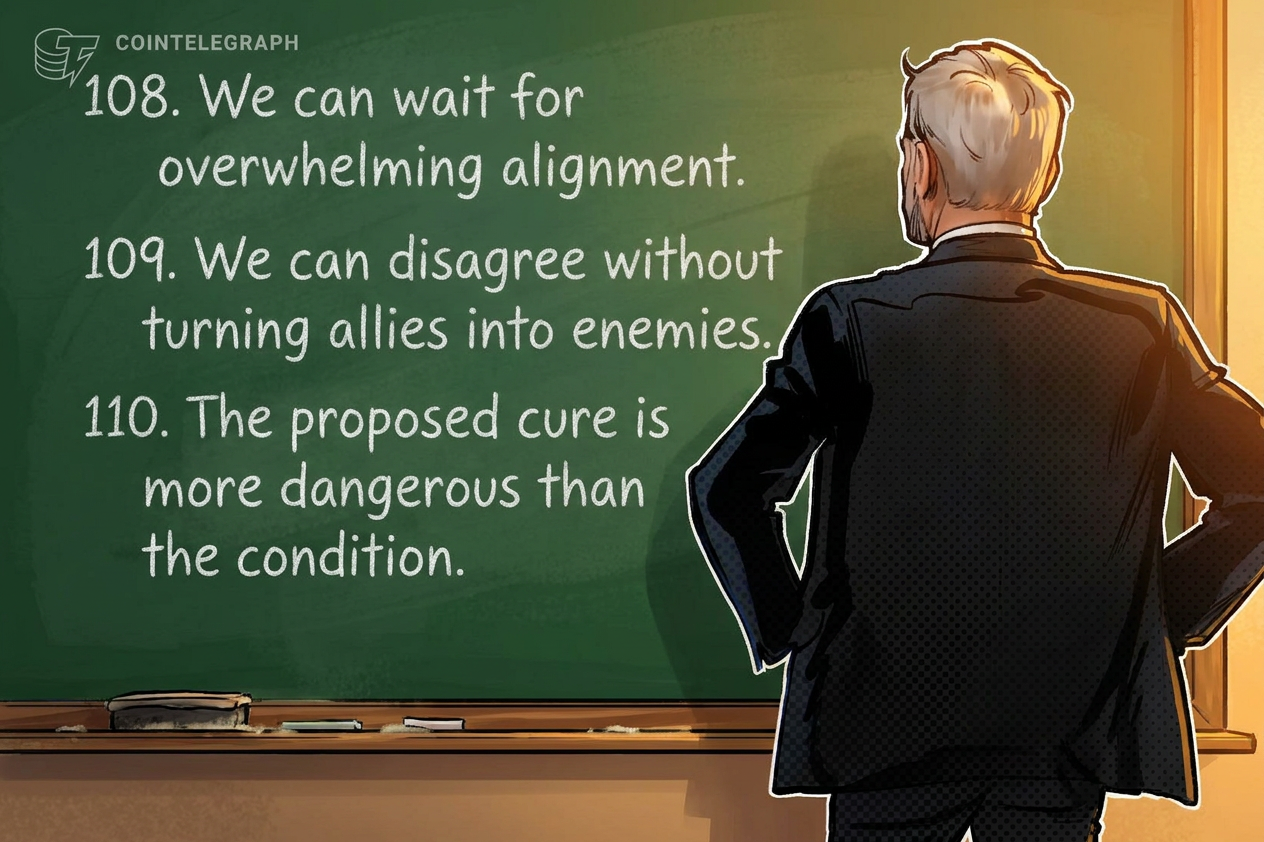
Saylor turns up heat with ‘110 reasons’ why BIP-110 is a bad idea
Michael Saylor publicly opposed BIP-110, a proposed temporary Bitcoin fork meant to restrict non-monetary data like Ordinals inscriptions and reduce network spam. He argued for “neutral rules, hard consensus, open markets, and permissionless innovation,” saying he agrees with supporters’ goals—lower node costs, affordable payments, and keeping Bitcoin focused on sound money—but not with the proposed fix. BIP-110 was introduced to preserve Bitcoin’s use as peer-to-peer cash and curb arbitrary data storage. Supporters, including Luke Dashjr, call Ordinals bloat a serious threat and say the fork would be temporary and avoid a chain split. Critics, including Adam Back, view it as an attempt to police what others can do with Bitcoin and as inconsistent with its censorship-resistant ethos. Approval looks unlikely for now: it needs 55% node support, while only about 1% of blocks supported it in the last period. Ordinals activity is also far below its 2023 peak.