Bitcoin's falling volatility hides a risk that Wall Street models may miss
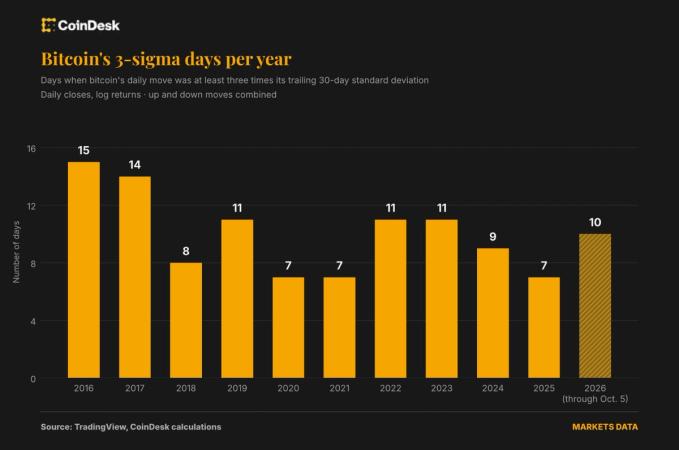
Bitcoin has logged 10 moves of at least three times its recent realized volatility in 2026, versus eight during all of 2018. Yet annualized volatility has fallen to about 46% from 84% in 2018, and average three-sigma moves have shrunk from roughly 10% to 7%. Since 2024, Bitcoin has had 26 such days, compared with eight for Nvidia. The recurring extremes can be missed by risk models that rely on recent volatility, potentially encouraging excessive exposure; value-at-risk also fails to measure losses beyond its threshold. Market participants cite macro shocks and crowded derivatives trades, including options selling, as drivers that can amplify sudden moves. Expected Shortfall and options hedges can help account for tail risk. Greater institutional participation and deeper liquidity have helped the market absorb shocks, but experts say extreme moves will persist.