Britain to spend £4 billion on grid bottlenecks. Can Bitcoin use the wasted wind?
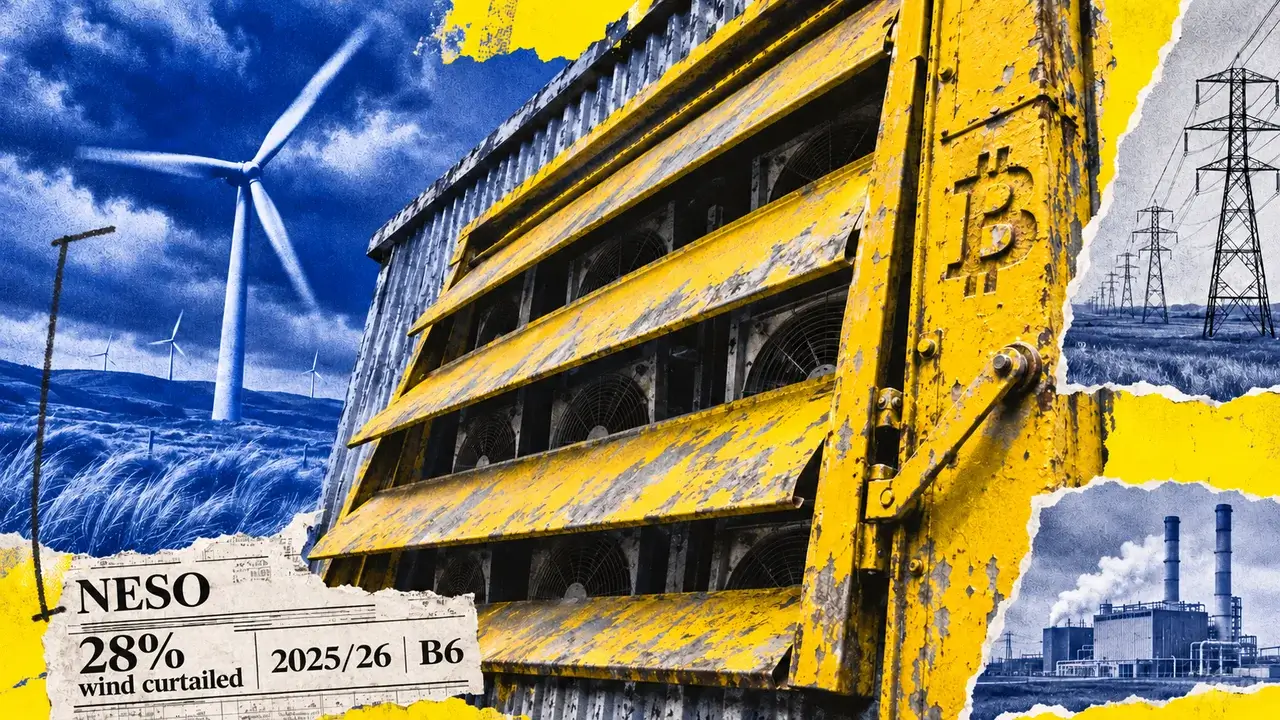
Britain’s grid operator NESO forecasts about £4 billion in thermal constraint costs in 2027, driven by transmission bottlenecks. Flexible Bitcoin mines could absorb Scottish wind that would otherwise be curtailed, but savings depend on their location, connection, timing and eligibility for grid services. Using surplus wind north of a constrained boundary would not necessarily reduce replacement gas generation needed elsewhere, consumer bills or emissions. Evidence that miners can curtail demand does not prove they can profitably increase consumption at the right times in Britain. NESO’s proposed flexibility scheme focused on Scottish boundaries and could begin service in 2028; it creates no Bitcoin-specific approval or payment entitlement. The forecast measures the grid problem, not the cost savings a mining project would deliver.