How MiCA brings banks closer to controlling Europe’s stablecoin access
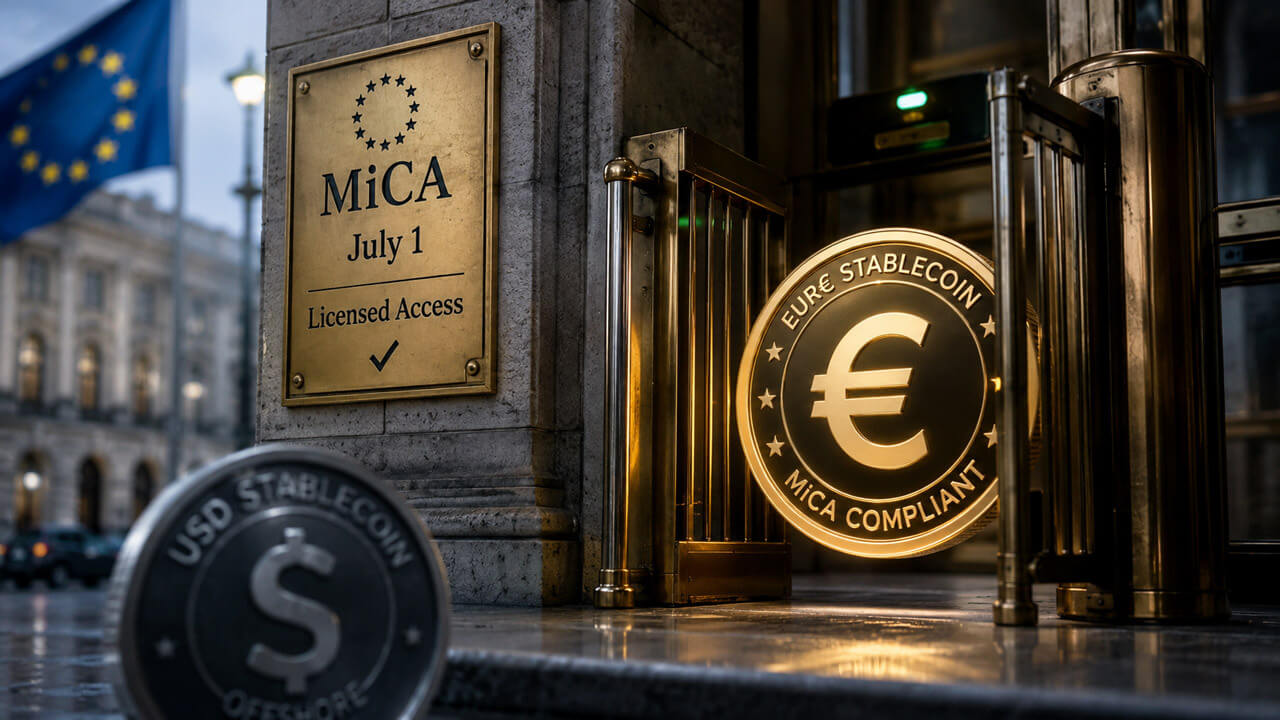
MiCA is shifting from a licensing deadline to a distribution filter. After the grandfathering period ended, authorized firms can keep serving EU customers, while unauthorized providers must stop onboarding new clients, marketing, and most normal activity except orderly wind-down steps. This gives compliant firms a structural advantage in access and distribution. Early examples show where that advantage may land: Crédit Agricole/CACEIS launched EURXT, a euro stablecoin on Ethereum for institutional settlement and tokenized fund workflows, with reserves held inside a regulated banking group. DZ Bank also won MiCAR authorization for a crypto wallet/trading service embedded in its banking app, bringing crypto access into ordinary retail banking channels. At the same time, platforms may remove tokens with unclear compliance paths: Revolut is reportedly phasing out USDT for EU users. The broader result is that MiCA may push stablecoin and crypto access toward banks, asset servicers, and licensed venues, while offshore or non-compliant products face fragmentation and reduced reach.