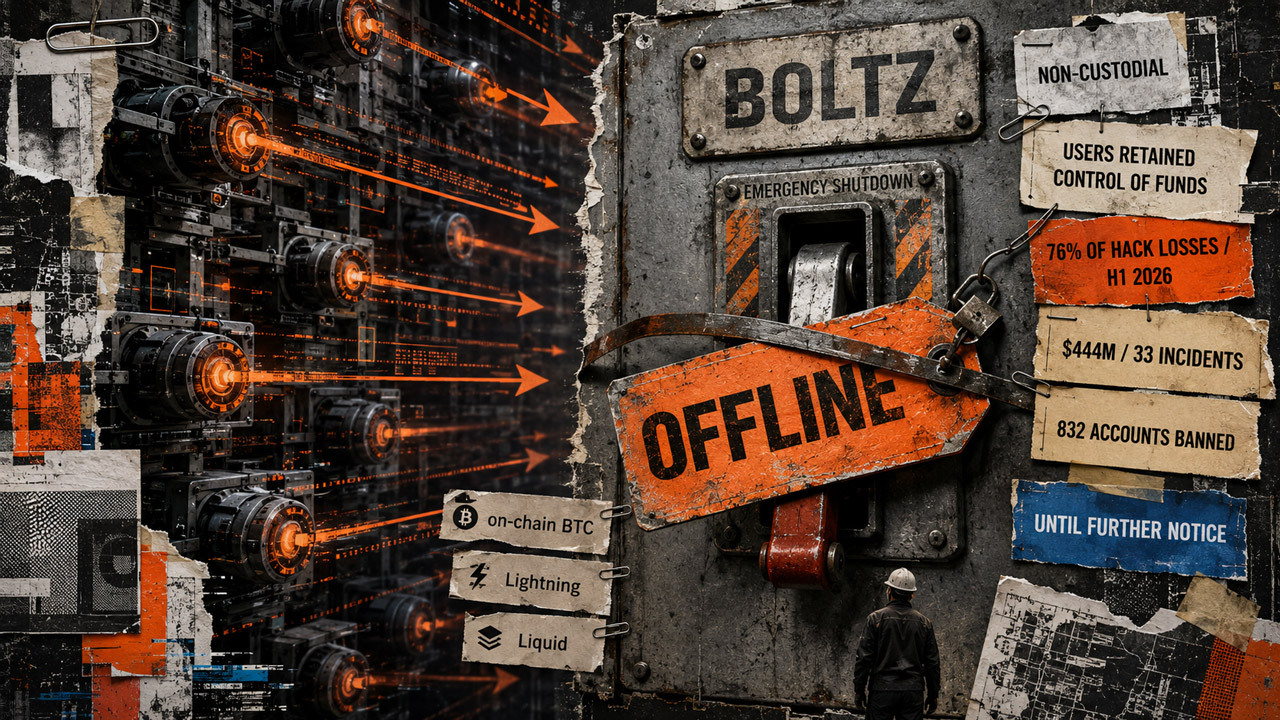
Boltz’s shutdown shows the real danger of AI hacking is pushing crypto back into the hands of giant custodians
Boltz said AI-assisted probing led to repeated contained exploits, and while its non-custodial design protected user funds, the team could not keep up with the pace of attacks, so swaps are now offline indefinitely. The core problem is that AI helps attackers automate discovery and exploitation faster than small teams can confirm issues, patch them, test fixes, and monitor for the next move. Larger companies can offset this with automated triage, AI-generated fixes, and review pipelines, but smaller crypto infrastructure teams often cannot afford the same security capacity. Recent reporting from security firms and agencies suggests infrastructure, credentials, and operational systems are now the main targets in crypto hacks. The result is a two-front burden: real exploit attempts and AI-generated noise. Smaller teams may need to raise security funding, outsource, narrow services, merge, or shut down risky products.