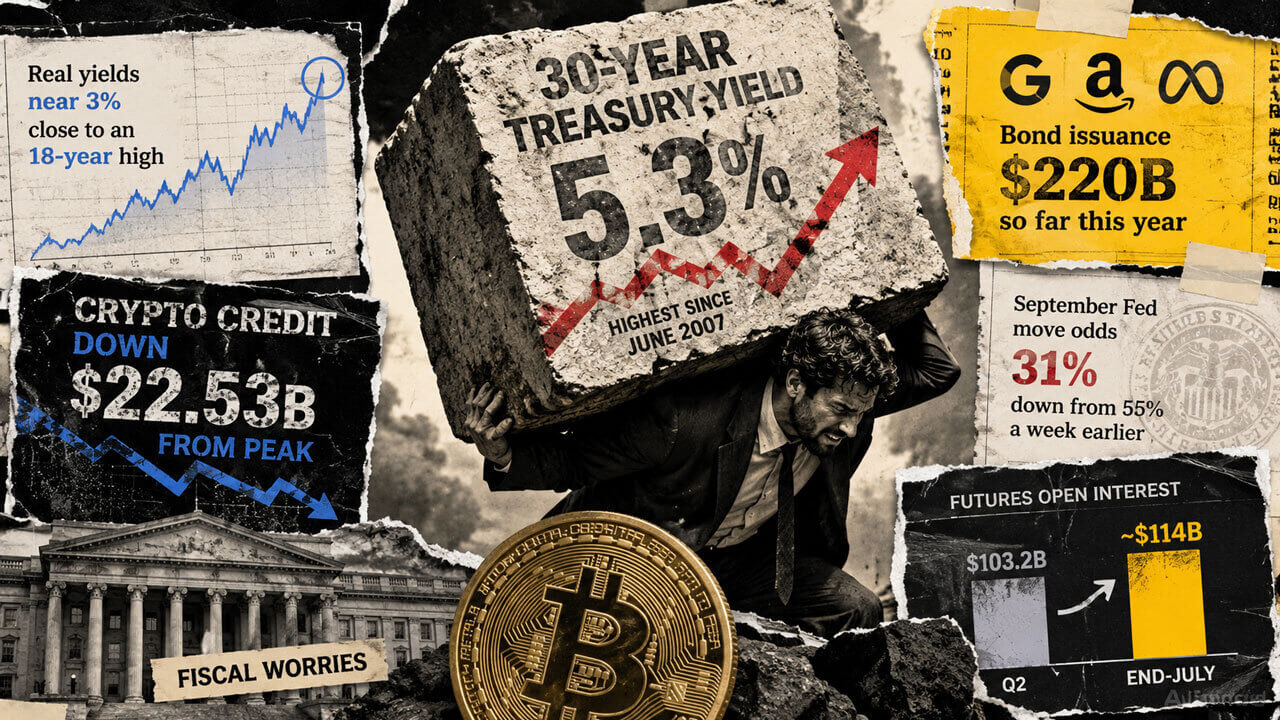
Bitcoin faces its highest Treasury hurdle since 2007 with $22.5B less crypto credit to unwind
The 30-year US Treasury yield rose above 5.3% for the first time since 2007, even as softer economic data lowered expectations for a September Fed move. The move is being linked to fiscal concerns and heavy bond issuance tied to AI spending, with real yields near 18-year highs around 3%. That matters for Bitcoin because Treasuries now offer attractive inflation-adjusted returns while BTC does not yield natively. At the same time, crypto-collateralized lending has fallen sharply from its 2025 peak, dropping to about $56.16 billion, with DeFi lending more than halved from last September’s high. Unlike the 2022 collapse, this decline has been gradual rather than driven by forced liquidations and lender failures. Futures open interest has started rebuilding, suggesting derivatives exposure is rising even as lending leverage stays lower. The key risk is macro pressure: if long Treasury yields keep rising, Bitcoin could fall on its own from higher real rates and bond competition. A sharper drop in lending or futures would instead signal a renewed crypto-credit unwind.