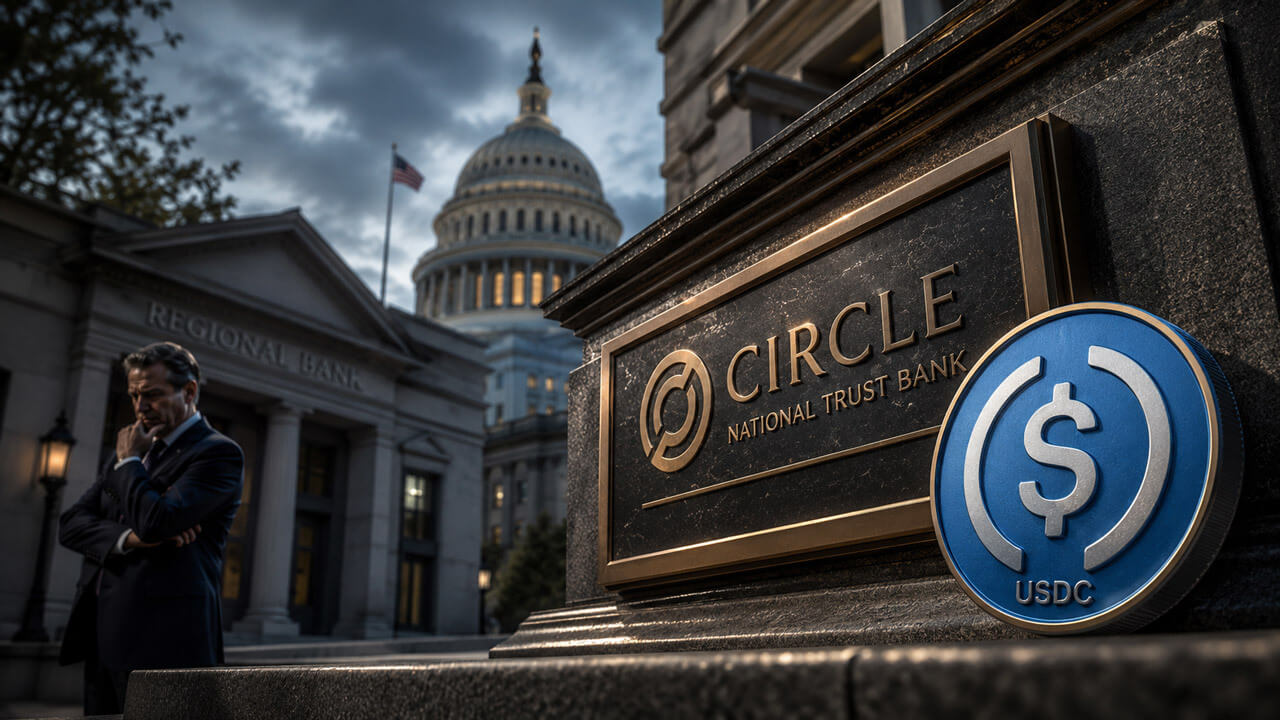
Circle became a federal trust bank – now lenders warn stablecoins is projected to drain $500 billion
Circle received OCC approval to open a national trust bank, giving USDC a clearer federal regulatory framework and making it easier for banks, payment firms, asset managers, and treasuries to use it. The charter is for custody and fiduciary services, not retail banking, deposits, or lending, so Circle remains a stablecoin issuer rather than a traditional bank. The approval strengthens USDC’s credibility, but it also heightens bank concerns. Stablecoins can shift deposits out of regional and community banks and into reserve assets like Treasury bills and repo, weakening cheap funding and reducing lending capacity. Fed research suggests the lending impact could range from tens of billions to over $1 trillion depending on adoption and reserve placement. Circle’s reserve mix already shows most USDC backing held in short-term Treasuries and repo, with a smaller share in bank deposits. The main policy fight has moved from whether stablecoins should exist to how they should be supervised and how much they should resemble bank deposits.