No dice? Your Bitcoin hardware wallet is probably not as secure as you thought it was
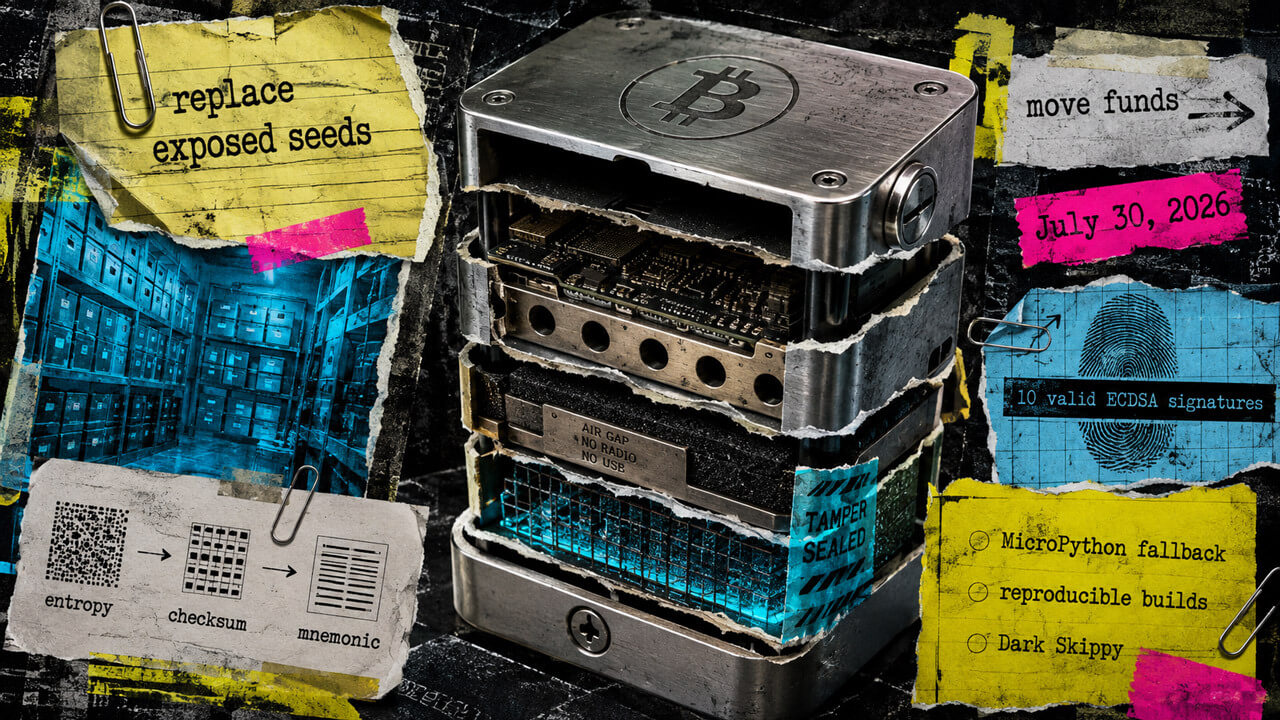
Coldcard’s RNG failure shows that air-gapping a Bitcoin wallet does not fix weak seed creation. A firmware bug sent seed generation to a deterministic fallback instead of the intended hardware RNG, so affected wallets could produce normal-looking 12- or 24-word mnemonics with far less entropy than expected. Attackers can reproduce candidate seeds offline, derive addresses, and search the blockchain for matches. The key security question is the seed’s initial randomness. If a device-generated seed may be compromised, updating firmware only protects future seeds; existing funds should usually be moved to a brand-new wallet created with fixed software and trustworthy entropy, or with documented, independent dice rolls. Coinkite says migration may be unnecessary only if at least 50 fair, private dice rolls were used. The incident also highlights a broader pattern: wallets can appear secure while relying on tiny random-number spaces. Similar failures have affected Trust Wallet browser extensions and Libbitcoin Explorer. The lesson is simple: an air gap protects only the randomness already inside it.